
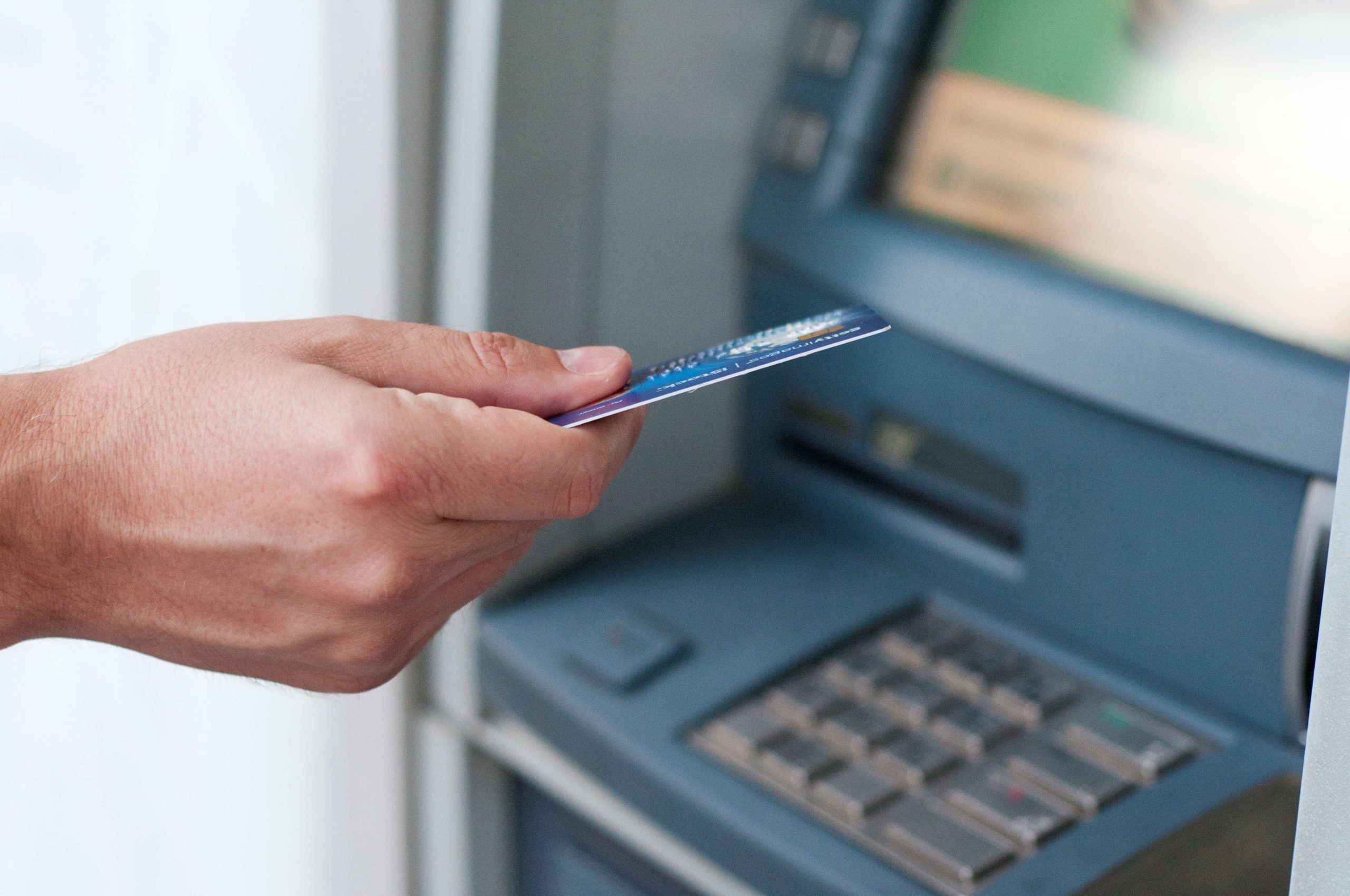
The Central Bank of Lithuania is looking at alternatives to current payment systems, and has indicated that Lithuanians will soon be able to pay for food, medicine and fuel even without an internet connection during emergencies.
The solution will require customers to update their bank cards. The Central Bank is also considering national payment systems to reduce reliance on international cards such as Visa and Mastercard. Meanwhile, commercial banks are skeptical and critical of another proposal – to require more ATMs and bank branches by law.
In the center of Vilnius, along Gediminas Avenue, there used to be a row of ATMs, but now only four remain. Elsewhere in the country, especially in rural areas, the situation is even worse, with residents saying that there are too few ATMs and bank branches, but people still need cash. Residents said authorities should consider how people could shop without cash if there is a prolonged power outage, as happened in Spain last year.
The Central Bank has been considering offline payments since 2024 due to concerns over the war in Ukraine. The only thing residents would have to do is get a new bank card when their old one expires. Central Bank Governor Gediminas Šimkus said the new system would allow them to buy food, medicine and fuel for a week for a set amount.
Eivile Čipkutė, head of the Lithuanian Banking Association, said
the new cards already have the necessary technology built into them and could be used for emergency payments.
They are a slightly newer generation of cards, and residents are already receiving them when they replace a bank card that is no longer valid.
Lithuania currently relies on the Visa and Mastercard networks, but many European countries are developing local payment systems to provide usable alternatives. Poland and Sweden already have their own payment systems, and Lithuania plans to introduce one by 2030. Evaldas Ruzgys, a member of the board of the Central Bank, said that such systems in Europe are not just a backup plan, but are used in everyday life.
However, commercial banks have suggested that they would prefer a common European model, considering that Lithuanians can already make international payments with cards, smartphones, smartwatches, rings and various apps.
The Central Bank has indicated that it wants to have more ATMs and bank branches in the regions, which could also be mobile and accessible, for example, once a week. Čipkutė noted that 60% of the country’s population did not visit a bank even once last year, and although 100 new ATMs were installed in accordance with the agreement with the Central Bank, one third of them are used very rarely. In the meantime, the Central Bank estimates that about 50 more ATMs need to be added.
Read the full article in English here: https://www.lrt.lt/en/news-in-english/19/2883172/lithuania-explores-offline-card-payments-during-emergencies
Read also: Estonia predicts mortgage payments to rise